How I Learned To Cook
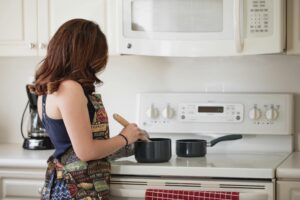
To cook is to perform an act of love—first for yourself, nourishing yourself, and then for others. You can be the worst cook ever, but the effort it took to create something from parts and pieces of edible things is still an act of love.
I wanted to learn to cook from my grandmother (Italian/Sicilian) when I was younger. Her food was amazing! It didn’t matter what she made; it was delicious. I asked her to teach me how to make her pasta sauce, and she came over to my place and showed me.
“How much salt are you putting in?” I asked her.
“This much,” Grandmother said while pouring salt onto her hand and tossing it into the sauce.
“How much is that?” I asked again.
“Just a little,” she’d respond.
For someone who had no idea what “just a little” was, it took me a while to learn how to season my pasta sauce to taste okay.
“How long does it cook for?” I asked.
“You’ll know. When it bubbles, turn it down lower and let it cook.”
I took copious notes, much of which I couldn’t read afterward because I wrote so fast. I was afraid to ask my grandmother to clarify anything. Years later, I photocopied her recipe tablet. I still have the recipes in her handwriting. Again, they have a few specific measurements—about a handful. Hey, that was the way it was back then.
But I wanted to know how to cook.
So, I used recipes and learned from them. I watched cooking shows on PBS, then the Food Network shows with chefs making dishes, and talk shows like the Rachel Ray Show, where she cooked dishes, and recently, YouTube videos. There’s just something about being a good cook that I strive for. However, I’m not a fan of the cleanup afterward. Writing this now, I feel this way because of my experiences with my grandmother. She would tell me how she made a dish if I asked after I ate what she cooked.
“Grandma, this is delicious. I would never think to put zucchini with sauce.”
She’d reply, “Francesca, you can use zucchini with a lot of things.”
She’d tell me how she made it like this, “You put the zucchini in the pan with the sauce, add some eggs on top and cook it.”
Ah, okay.
I could never cook like her. Cooking is a personalized act. No two dishes taste the same, with different people making them, even if following the same recipe. It’s weird, but the truth. Have you ever had a sandwich made by someone else, the same sandwich you’d make, and it just tastes different?
My great-aunt, my grandmother’s sister-in-law, made these wonderful pink Italian cookies, and she always had them on hand. I could do a pop-in in July, and she’d pull those babies out of the freezer to enjoy them. I don’t know if she made fresh batches every couple of months or if they were frozen from Christmastime, but they were still incredible.
I didn’t get the recipe from my great-aunt before she passed away. When I was in my twenties, I asked my grandmother if she had it. She let me copy it, but told me I’d never be able to do the icing because it was too difficult. It involves melting sugar into a clear liquid and dipping the cookies into it, and there is only a short window of time before the sugar begins to crystallize again. I did it. It was challenging, and I burnt my fingers a few times, but I did it.
Now, I’m a confident cook and know what I’m doing, but it wasn’t always like that. I had to learn by trial and error. Some things turned out good, others not so much.
So, I thought I’d share my tips on how to cook well.
Forget every negative thing you’ve ever heard about cooking or any criticism you’ve heard about your cooking. Throw it out like the ends of a carrot. Take a breath and relax. See cooking as making something out of parts, and you are the orchestra leader putting it all together. It’s no big deal. There’s nothing to fear. You’re just composing a symphony of food.
Oh, and before cooking, it helps to close your eyes and visualize creating a delicious meal.
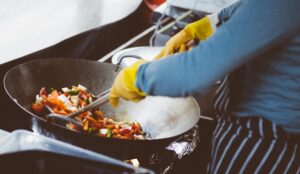
Essential items to have on hand in your pantry and fridge:
extra virgin olive oil (Here’s a list of authentic olive oils.)
butter (Real butter, not margarine, unless a recipe calls for it.)
eggs
milk (I use almond milk, but have Half and Half on hand for specific recipes.)
salt and pepper (I use a sea salt and a pepper grinder, but you don’t have to; shakers are fine.)
sugar
seasonings: garlic powder, onion powder, Italian seasonings, dried basil, oregano, thyme, sage, rosemary, Herbes De Provence (I just learned about this one, and it’s delicious!), steak seasoning, paprika, and cinnamon for baking. (There are a ton out there. These are the ones I use most often.)
Grey Poupon mustard (A store brand is fine.)
mayonnaise
Greek yogurt, plain
Romano or Parmesan cheese
onions
garlic
vinegar
lemons
Italian panko breadcrumbs (check the labels. Fewer ingredients are best.)
flour
cornstarch
baking soda
baking powder
These are just a starting list. When you make recipes, you’ll need to buy what goes into each one. Then you’ll build up your pantry and spice cabinet over time. The more you make things, the more you’ll have on hand and know what goes with what.
I suggested having those things in your pantry/fridge because many recipes will use those staples. For example, if you’re making meatballs, you’ll need breadcrumbs, eggs, Italian seasonings, grated cheese, and then you buy the meat or whatever you’re using. I just recently learned of zucchini meatballs that I’m going to make.
Cooking is not difficult. You can put water and an egg in a pot and boil them to make a hard-boiled egg, which you can eat like that or use in a salad recipe. Making a recipe is just following the instructions.
Items to use for cooking:
measuring cups and measuring spoons
large spoons for stirring/mixing, spatula, flipper (I use wooden spoons for sauteing in a pan and stainless steel spoons for stirring soups, sauces, etc.)
pots and pans (You can find these reasonably priced at a store or from deals at yard sales, like an old cast iron pan or stainless steel ones. I found two excellent-condition stainless steel pans with lids at an estate sale for $3.00. Good quality, made in the USA. Don’t shy away from that resource for pans, at least while starting. Of course, you can pay a premium and get some nice pots and pans like Le Creuset, All-Clad, Made In, or a less expensive Lodge or Caphalon, but you don’t need them to be a good cook.)
good sharp knives
a meat thermometer
colander
cutting board (Essential! You don’t want to ruin a countertop. I don’t recommend plastic.)
hand soap or gloves (you’ll need to wash your hands before you touch the food you’re going to prepare)
Helpful Tips:
Always keep pots’ handles facing inward on the stove. If you bump a handle, the hot pot or pan can go flying!
Use a timer. It’s a game changer, so you don’t burn things.
Follow meal recipes the first time just as they are. If you use them again, then you can be creative and change them to your liking.
Follow baked goods recipes exactly. Use measuring cups and spoons. These recipes are more scientific, and you can’t really deviate from the measurements; otherwise, they won’t work.
Be creative! Sure, hot dogs are good, but if you cut them up and cook them in a pan, then add some baked beans, you’ve got a meal (that’s a bit healthier with the beans. We get the hot dog brands that use meats, with no nitrates or fillers.)
Be easy on yourself, and don’t take it so seriously! Sure, you need to be careful when using heat to cook or handling sharp knives, but when you’re cooking, loosen up. Put on some music and enjoy the moment.
Taste! When you’re making something (this doesn’t apply to baked goods), taste it, like a sauce, or when sauteing vegetables, to see if you need to add salt or something else. ***However, please don’t taste things that have raw meat in them. Wait until the meat cooks thoroughly, especially with poultry.
Time out things. Learn how long things take to cook. For example, if you’re cooking breakfast and you want to have potatoes, meat, eggs, and toast, potatoes cook longer than most meats, and eggs take very little time. So it would go like this:
- Put potatoes on to cook first.
- Begin to cook the meat (if using that).
- Prepare the pan for the eggs as you want them (if soft-boiled, you only need a pot with water).
- Get bread or whatever you’re using in a toaster (English muffins and bagels take longer than toasting bread).
- When potatoes are nearly done, turn on the toast and cook eggs (soft-boiled eggs need more time, but frying an egg takes a few minutes).
Learning how long items take to cook will help you control how everything turns out. You shouldn’t put all the dishes or parts of a dish on at the same time. Everything has different cooking times. The more you do it, the more you learn, and it’ll become second nature.
Today, we have the Internet right in the palm of our hands! I didn’t have that when learning how to cook. I used (and still use) printed recipes. Now, all you have to do is say to your phone, “How do I make lasagna?” Within seconds, you’ll have multiple recipes to choose from and videos, too!
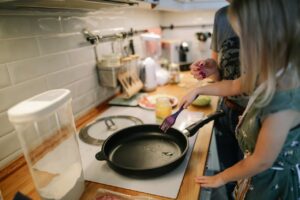
The most important thing is that you need a desire to cook. When you enjoy what you’re doing, the food tastes better because you’re cooking with love and not obligation. Try to make it a better experience. Maybe try planning out a weekly menu to alleviate the pressure every day to come up with something.
And the final tip – don’t go to grocery stores hungry! You may end up buying something on impulse.
Thank you for reading. I hope I’ve helped you get cooking! It’s healthier when we make it, too. If you have any tips I didn’t cover, I’d love for you to share them in the comments.
To cooking,
Francesca
Created by a human for humans.
© 2024 FrancescaME | All rights reserved.